Word of the Day: Instruction
Today’s word of the day, courtesy of The Dictionary Project’s daily email, is instruction. This noun, pronounced / ɪnˈstrʌk ʃən /, means “the act or practice of instructing or teaching; education,” “knowledge or information imparted,” “an item of such knowledge or information,” “Usually instructions. orders or directions,” or “the act of furnishing with authoritative directions” (https://www.dictionary.com/browse/instruction).
It appears in English “c. 1400, instruccioun, ‘action or process of teaching,’ from Old French instruccion (14c., Modern French instruction), from Latin instructionem (nominative instructio) ‘an array, arrangement,’ in Late Latin ‘teaching,’ from past participle stem of instruere ‘arrange, prepare, set in order; inform, teach,’ from in- ‘on’ (see in- (2)) + struere ‘to pile, build’ (from PIE *streu-, extended form of root *stere- ‘to spread’).
“Teaching is the general word for the imparting of knowledge …. Instruction has the imparting of knowledge for its object, but emphasizes, more than teaching, the employment of orderly arrangement in the things taught. [Century Dictionary]
Meaning ‘an authoritative direction telling someone what to do; a document giving such directions,’ is early 15c” (https://www.etymonline.com/word/instruction).
So instruction can be something very specific, with a specific object, or something more general, but still with a specific object.
I’m really bad at keeping up with old friends and colleagues. I don’t know why. Perhaps it is a character flaw. So I was shocked when I looked up my dissertation director and found out that he had died seven years ago.
“Wednesday, March 20, 2019 – 2:10pm
“Coburn Freer
“Wilbert Coburn Freer passed away February 26, 2019, in the Episcopal Church Home, Rochester, NY. He was born in the French Quarter, New Orleans, LA, to Lillian Hicks Glascock and Bruce Glascock on November 5, 1939.
“He grew up in Portland, OR, graduated from Roosevelt High School, received BAs in Mathematics and English Literature (Lewis and Clark College), and a Doctorate in English (University of Washington). He taught English and Creative Writing at University of Arizona; University of Montana; University of Oulu (Finland); University of London (England); and University of Georgia, where he served as Department Head (English) and from which he retired as Professor Emeritus.
“Throughout his forty-year career he wrote, and presented at conferences, numerous scholarly papers on sixteenth- and seventeenth-century English literature, and wrote two books (Johns Hopkins Press), Music for a King: George Herbert’s Style and the Metrical Psalms (1972), and The Poetics of Jacobean Drama (1981). He received both National Endowment of the Arts and Fulbright grants” (https://engl.franklin.uga.edu/news/stories/2019/memoriam-dr-coburn-freer-former-department-head).
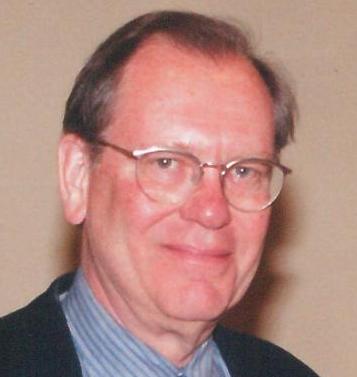
Dr. Freer was a wonderful advisor, full of grace and wisdom. I finished my coursework in 1985, before my wife and I moved from Athens, GA, to Clemson, SC. I started an instructorship at Clemson, and my wife started as an assistant professor. Neither of us had finished our doctorates. We spent the next several years working on hers, and I put mine off. Dr. Freer, as department head, gave me an extra year to finish, which he probably didn’t have to do, but he was full of grace.
I remember going to social events at the Freer home. I grew up with Kerry Blue Terriers, and Dr. Freer had an Airedale, very similar except in color. He smoked a pipe, just like my dad. And just as my dad appears to me whenever I think of what a pastor is, Dr. Freer is for me the archetypal English professor. He received copies of my chapters and returned more than I had written, and all of his criticisms were spot on. Yet I never felt diminished by his critiques of my work. It was as if he was leading me from darkness to light.
I also had Dr. Freer for several classes. The one I remember the best was his class on John Milton. I had read Paradise Lost in high school and again in college. The first time it was a struggle to figure out what Milton was doing. The second time, I understood it much better, but there was still something challenging about it. But when Dr. Freer took our class through the poem, I could see the humor, the profundity, and the beauty in a way that made a dense text one of my favorite works of literature. He taught me to understand why Milton is considered one of the greatest of English poets. Another class I remember was his on the Renaissance poets. And John Donne is still one of my favorites.
In my fancy, I have an unusual image of heaven. It won’t be people turned into angels playing harps and singing all day long. I see it as an enormous park, with tables everywhere, and people sitting at the tables for eternity. And in this eternity, I will have the opportunity to catch up with all the people that I have failed to keep up with in this life. I especially think of people who have already passed—Tom Deitz, a friend from my grad school days in Athens; Mary Hay, a woman a year behind me at Davidson who passed on way too young of breast cancer; my brother-in-law Russ Folger, also from Davidson, who died too young of lung cancer; Dr. Stephenson, my advisor in my masters program, who virtually pushed me into the study of Old and Middle English, Dr. Freer, and my dad, who died way back in 1987. I have so much to tell them.
And I really mis their instruction.
Today’s image is of Dr. Coburn Freer from that same obituary. May he rest in peace.